Practical Considerations for Lyophilized Peptide Reconstitution
Reconstituting a lyophilized peptide may seem straightforward, but the choices made during this step can influence everything from peptide solubility to experimental consistency. Selecting the wrong solvent or handling the sample improperly can introduce unnecessary variability before an experiment even begins.
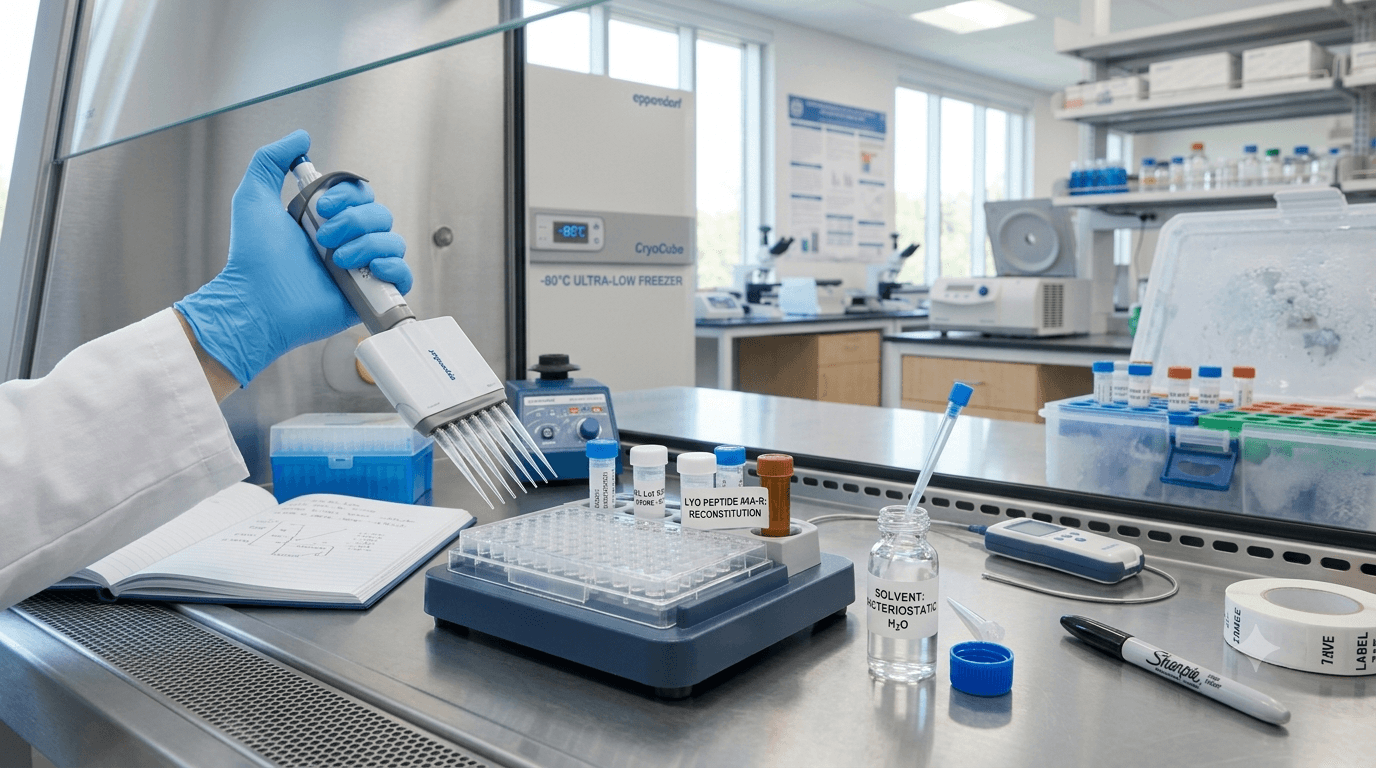
Reconstituting a lyophilized peptide may seem straightforward, but the choices made during this step can influence everything from peptide solubility to experimental consistency. Selecting the wrong solvent or handling the sample improperly can introduce unnecessary variability before an experiment even begins.
Although there is no universal protocol suitable for every peptide, understanding the factors that influence peptide solubility and stability can make the process far more predictable.
This guide outlines the key considerations for reconstituting lyophilized research peptides and highlights common mistakes that can easily be avoided.
Why Are Peptides Supplied as Lyophilized Powders?
Most research peptides are supplied in a lyophilized (freeze-dried) form because it provides greater stability during transport and storage.
Removing water reduces many of the chemical reactions that contribute to peptide degradation, allowing researchers to store peptides for extended periods under appropriate conditions. Lyophilization also makes it easier to accurately prepare stock solutions at concentrations that suit individual experimental requirements.
For these reasons, peptides are typically reconstituted only when they are needed for laboratory work.
Before You Begin
Before opening the vial, review any documentation provided with the peptide. Information such as peptide sequence, purity, molecular weight, and recommended handling conditions can influence the reconstitution strategy.
It's also worth considering several practical questions:
- What concentration will be needed for the experiment?
- Will the peptide be used immediately or stored as a stock solution?
- Is the peptide known to have challenging solubility?
- Are there sequence features or chemical modifications that may require special handling?
Planning these details beforehand often prevents unnecessary adjustments later.
Reconstitution quantities can be calculated via our Peptide Calculator
Allow the Vial to Reach Room Temperature
If the peptide has been stored in a refrigerator or freezer, allow the unopened vial to warm to room temperature before removing the cap.
This simple step helps prevent condensation from forming inside the vial. Introducing moisture before the intended solvent is added may affect peptide stability, particularly during long-term storage.
Only once the vial has reached room temperature should it be opened for reconstitution.
Choosing the Right Solvent
One of the most common questions researchers ask is, "What should I dissolve my peptide in?"
The answer depends on the peptide itself.
Different amino acid compositions produce very different solubility characteristics. Hydrophilic peptides often dissolve readily in aqueous solutions, whereas peptides containing a high proportion of hydrophobic residues may require an alternative solvent before dilution into the final experimental buffer.
Rather than relying on a single approach for every peptide, researchers should follow the manufacturer's recommendations whenever available and consider the requirements of their downstream application.
Using high-quality laboratory-grade reagents is equally important, as impurities in solvents can introduce unwanted variability into sensitive experiments.
Add Solvent Gradually
Instead of adding the entire solvent volume at once, many laboratories prefer to add a smaller initial volume and gently mix the solution before bringing it to the final concentration.
This approach makes it easier to observe whether the peptide is dissolving completely and allows adjustments if necessary.
Vigorous shaking is generally unnecessary and may introduce bubbles or foam that make the solution more difficult to inspect. Gentle inversion or slow pipette mixing is often sufficient.
Check That the Peptide Has Fully Dissolved
A clear solution does not always guarantee complete dissolution, but visible particles or cloudiness may indicate that additional mixing or an alternative approach is needed.
If the peptide does not dissolve as expected, avoid repeatedly adding different solvents without understanding the peptide's properties. Reviewing the peptide sequence or consulting the supplier's technical guidance is usually a more effective solution than trial and error.
Prepare Stock Solutions Thoughtfully
Many researchers prepare concentrated stock solutions and dilute them as needed for individual experiments.
This approach offers several advantages:
- Consistent concentrations across experiments
- Reduced preparation time
- Less handling of the original peptide
- Easier preparation of working solutions
When preparing stock solutions, accurate calculations are essential. Double-check molecular weight, desired concentration, and final volume before beginning.
Aliquot to Reduce Freeze-Thaw Cycles
Once the peptide has been successfully reconstituted, dividing the solution into smaller aliquots is generally considered good laboratory practice.
Aliquoting minimizes repeated freeze-thaw cycles, which may affect peptide stability over time. Instead of thawing an entire stock solution for every experiment, researchers can simply retrieve a single aliquot as required.
This strategy is particularly useful for peptides that are used intermittently over several months.
Label Everything Clearly
A surprising number of laboratory errors stem from incomplete sample labeling.
Every aliquot should include enough information to identify it without referring to external notes. Useful information includes:
- Peptide name
- Concentration
- Solvent
- Preparation date
- Batch or lot number
- Operator initials, if required by laboratory procedures
Good documentation makes future experiments easier to reproduce and reduces the chance of confusion when multiple peptide stocks are stored together.
Common Peptide Reconstitution Mistakes
While every laboratory develops its own workflow, several mistakes appear frequently:
- Opening frozen peptide vials before they reach room temperature
- Assuming all peptides dissolve in the same solvent
- Preparing larger volumes than necessary
- Failing to aliquot stock solutions
- Incomplete labeling of prepared samples
- Ignoring sequence-specific handling recommendations
Avoiding these issues can save both time and valuable research material.
Frequently Asked Questions
Can every peptide be dissolved in water?
No. Peptide solubility depends on amino acid composition, chemical modifications, and overall sequence characteristics. Some peptides dissolve readily in aqueous solutions, while others require different solvents or stepwise dilution.
How concentrated should a peptide stock solution be?
The optimal concentration depends on the intended application and the peptide's solubility. Researchers often prepare concentrated stocks that can be diluted into working solutions immediately before use.
Should peptide solutions be frozen after reconstitution?
Many laboratories store reconstituted peptide stock solutions frozen when appropriate for the peptide and intended duration of storage. Storage conditions should always follow the manufacturer's recommendations.
For laboratory and research use only. Not for human or veterinary use.